Different types of ADUs

Last summer, a North Park couple turned a dusty garage into a bright studio. By fall, rent covered most of their mortgage. Same lot, new life. That’s the power of an ADU—now let’s find the version that does the same for this property.

ADUs in San Diego: Which One Fits Your Home (and Life)?

A San Diego ADU can take many forms depending on the property and the homeowner’s goals. It might be a stand-alone backyard home, a garage conversion, an addition to the main house, a unit built over the garage, a basement conversion, a compact JADU, or even a prefab structure.

The right choice depends on available space, budget preferences, and the long-term goal. This could include rental income, housing for family members, or increasing property value.

What is an ADU—and why San Diego loves them

An ADU is a secondary home on the same lot as a primary residence. Around San Diego, ADUs go by many names—granny flat, backyard home, casita. Homeowners add them to create rental income, keep family close, or boost resale value in a high-demand market.

best san diego adu builder

The lineup (in plain English)

1) Detached ADU

A small stand-alone home in the yard.
Great for: Privacy and strong rental potential.
Why people like it: Clear separation and design freedom.
Heads up: Needs yard space and new utility runs, so it’s a larger project.

2) Attached ADU

An addition that shares a wall with the main home.
Great for: Narrow lots or when yard space is limited.
Why people like it: Efficient utility tie-ins and a unified look.
Heads up: Less privacy than a detached unit.

3) Garage Conversion

Turn an existing garage into a real apartment.
Great for: Fastest route on many properties without expanding the footprint.
Why people like it: Often quicker and friendly to the budget.
Heads up: Design it well so it never reads like a former garage.

4) Over-Garage ADU

Build a second story above a new or existing garage.
Great for: Saving the yard by going vertical.
Why people like it: More light and views, clean separation.
Heads up: Structural work and stairs or elevator planning add complexity.

5) JADU (Junior ADU)

A compact unit carved from the existing home with an efficiency kitchen.
Great for: Tight budgets, multigenerational setups, and house hacking.
Why people like it: Minimal footprint and faster path to usable space.
Heads up: Smaller by design. Owner-occupancy rules can apply.

6) Prefab or Modular ADU

Factory-built modules delivered and finished on site.
Great for: Predictable schedules and lower site disruption.
Why people like it: Consistent quality and a tidy install day.
Heads up: Crane access, trucking routes, and limited customization need planning.

7) Multifamily Property ADUs

ADUs added to duplexes and larger buildings.
Great for: Boosting income on existing plexes.
Why people like it: In many cases more than one ADU is allowed.
Heads up: Plan utilities, trash, and circulation early.

8) Basement or Under-Home ADU

Finish below-grade or under-floor space into a legal unit.
Great for: Sloped lots and homes with usable under-floor volume.
Why people like it: Efficient use of space and discreet from the street.
Heads up: Moisture control, egress, and daylight are musts.

Quick Comparison (what usually drives the decision)

Quick Picker Guide - ADU Selection
Goal
Best Fit
Reason
Maximum privacy and rental value
Detached ADU
A fully independent home with strong tenant appeal and long-term flexibility.
Balanced cost and timeline
Garage Conversion or JADU
Reuses existing structure to reduce build time and keep costs manageable.
Preserve outdoor space
Over-Garage ADU
Expands living area vertically while keeping the yard open.
Limited lot width
Attached ADU or Over-Garage
Uses shared walls or vertical layouts to make efficient use of space.
Multigenerational setup
Attached ADU or Basement Conversion
Close proximity allows connection with privacy and accessibility.
Predictable schedule
Prefab or Modular ADU
Factory-built units follow controlled production and installation timelines.

A Simple Plan to Move Forward

Step 1: Walk the Property

Let’s take a look at the lot, see what’s possible, and talk through layout, access, and utility connections.

Step 2: Design and Align

We’ll shape the concept together — matching the look, layout, and scope to your goals and budget preferences.

Step 3: Permit-Ready Plans

Clear, code-compliant drawings that make reviews smoother and move the project forward faster.

Step 4: Build with Confidence

Once approved, we handle the build — on schedule, with open communication, and attention to detail from start to finish.

Benefits of Adding ADU

Flexible Living

  • Guest house / Family
  • Home office / Studio
  • Aging parents / Caretaker

Rental Income

  • Passive income
  • Mortgage assistance
  • Increased cash flow

Property Value

  • Appreciation
  • Marketability
  • Higher resale value

Start your journey towards enhancing your living space!

Y9 Construction is based in Sorrento Valley with over 15 years of experience improving homes throughout San Diego. We’re a design-build firm specializing in detached ADUs, garage conversions, and home additions , including full permitting and finish packages. For a no-pressure feasibility review, contact us at 1 (800) 801-0290 or info@y9construction.com

© 2025 Y9 Construction, Inc.

Architect vs. a Design-Build Firm – 5 Key Factors to Consider

If you’re about to embark on a new home improvement project, you’ve probably been wondering where to begin, and this question has probably crossed your mind: “Should I hire an architect/designer and a general contractor separately, or should I hire a design-build firm to design and build my space in one go?” In this article, we’ll explore the perspectives and approaches of each option to help you make the best decision.

Disclaimer: Not all companies are the same, and in this article, we are describing what we believe to be the most likely scenario. In reality, there are some exceptions and you may find differences within each approach. All our examples illustrate the optimal scenario. Also, please keep in mind that in order to examine this subject objectively, we will analyze and review only the design services provided by both companies, i.e., design services provided by the design-build firm and design services provided by the design firm. Furthermore, all the subjects mentioned in this article apply to both home renovation projects and new construction, so whether you’re planning to build a new kitchen or building a new house from the ground up, this article should hopefully give you a strong foundation of knowledge on the subject. 

Designer reviewing plans for a custom home remodel in San Diego, CA

Now, let's first understand the terminology used in the home improvement industry:

What are design-build firms? 

This simply means one contract and hiring only one company. Basically, you get both the design and production teams under one roof. One distinct characteristic of the design-build firm is their inability to predict, but the ability to commit. That is to say, most of the time, when you hire a design-build firm for a project, you will first sign a contract with an agreed-upon amount for the job to be completed. However, things may change in the future, such as material costs going up, labor taking longer than expected or even new building regulations that slow down the construction stage. Once your contract has been signed, these changes aren’t likely to affect you at all. You’ll pay only the agreed-upon amount. It is also important to note that every coin has two sides, and these fluctuations can also work in favor of a design-build business. For example, the company might have purchased drywall at a 10 percent discount or saved one week’s worth of labor on a remodeling project that took four weeks instead of the expected five weeks. Regardless of how the process evolves, the price will be the same as agreed upon, and the firm will adapt to the outcome if circumstances change in either direction.

What does an architect do? 

You likely already know the answer to this question, but just so we’re on the same page, an architect is someone who designs, plans and sometimes oversees the construction of buildings. When we use the term “designer” in this article, it can refer to either an architect, a designer or even someone without formal education who has the knack for home design and the ability and knowledge to draw plans. While we’re at it, a quick word about design to avoid confusion. The term “designer” in this article does not in any way refer to an interior designer. An interior designer is someone who deals with the appearance of the interior (for example, what furniture, rug, drapes or pillows to choose), while the term designer in this article refers to someone who arranges the actual construction, placement of elements, layout and draws the actual building plans.


What is the role of a structural engineer? 

They ensure that structures can withstand the stresses and pressures imposed by use and the environment. Whether hired by the designer or the homeowner, the engineer has the final say in major structural decisions and is the one who signs off on the plan before it is submitted to the city for inspection. If you want to build a new house and you consult an architect, you will come up with a design you like together. After that, it’s time to consult a structural engineer. The engineer will examine the plan and perform all necessary calculations to ensure that the structure is reinforced to withstand high winds and will remain standing even after major earthquakes. Basically, after all those calculations, the structural engineer will come up with the precise building settings and will answer all structurally related questions, such as what size beams to use, as well as questions about joints, fittings, walls and whether to use steel or concrete as a reinforcement material. This is required to ensure the stability of the structure for many years to come.

So, now that we’ve covered the fundamentals, let’s dive right in and explore both approaches.

Custom kitchen remodeled by Y9 Construction, design and build general contractor in San Diego CA
1. What is the main interest of the two?

When you hire a design-build firm, their primary interest in the project is usually not the design part, but the building itself. Although they have qualified designers on staff who can assist you in creating a great plan, their primary focus is on the construction phase. As a result, design-build firms have the motivation and capability to collaborate with homeowners to develop a plan that is practical, well-executed and within the homeowner’s budget. The designer, on the other hand, is solely concerned with creating the design. They are well-prepared to create a beautiful design for your space, but sometimes they go above and beyond what you require or request. As a result, it will not necessarily match to the financial/practical aspects of your project. Generally speaking, when you hire a design firm, they will try to leave their mark with their work by featuring your ideas in a more detailed and sophisticated manner. By doing more than what you need, you can end up with a plan that is more expensive and complicated to execute, while a designer at a design-build company often has an overall view of the plan and tends to not overdo it, since at the end, the design-build company committed/will commit to performing the project for the agreed amount.

Additionally, because the design firm is mainly interested in creating the design, once the plan is ready, the designer will no longer be involved in your project and you will need to find a contractor to carry it out. A design-build firm, on the other hand, will continue because they are in charge of all aspects of the work, including handling all permits in between. And since the construction phase is essentially their bread and butter, they will go to great lengths to ensure that the design phase is accurate, practical and within your budget.

2. What about gray areas during construction work?

Gray areas during construction have a significant impact on your renovation experience. To get a better understanding of this delicate topic, let’s take a look at an example. Assuming that you’ve been working separately with a designer to come up with a plan that accommodates your needs and the plan looks great on paper, you’re now ready to begin construction. So, you’ve done your research and decided on a local builder. When the construction team starts working on your new home, they discover that the special windows you’ve chosen and included in the design are no longer available because the window manufacturer discontinued the window collection you intended to use. Things shift all the time in this line of business, and now the window manufacturer has released a new line. This could be really frustrating because you absolutely loved those windows and already spent days searching for them, and now you’re left with an unresolved issue that prevents the builders from continuing with their job until you fix it. This is a classic gray area scenario where no one is to blame, as no one could have predicted that the window manufacturer would phase out the line you liked so early. So, what’s next? 

You may have only one realistic option, which is to find new windows that are compatible with the original design you’ve planned. Even though you may end up with new windows that are more stylish, functional and affordable than your original ones, finding them will most likely be quite a hassle. You will still need to spend hours or even days sending emails, making phone calls and driving around to find the right windows for your home. Suppose you’ve found a new line of windows you like after a few days of hunting, but they’re not the same size as the first ones and the builder has already done the framing according to the size of the prior windows— now what? Now it’s even more complicated. Even if the designer you’ve been working with agrees to revise the plan without charging you extra, you will most likely not be compensated for the time delay, all the energy and effort spent looking for new windows, the expense of the additional work necessary by the builder to adjust the framing, the extra days off from work, and so on.

If the same thing happened while working with a design-build firm, you would be in a different position, as we will explain. Typically, when hiring a design-build firm, you can choose between two options: with or without the finishing materials. This means the homeowner can either provide the finishing materials (doors, windows, tiles, lighting, sinks, faucets, etc.) or the company can provide them for you.

If the situation above occurred while you supply the finishing materialsIn that case, supplying the finishing materials is your agreed-upon responsibility, so it’s obviously your job to supply matching windows and resolve this matter. However, because the design-build firm has already begun the construction work, they are in a position to keep the project moving. As a result, it is most likely that they will help you find new matching windows to minimize the hassle.

If that situation occurred while the design-build firm supplies the finishing materials – A scenario like the one above has a lower chance of happening when a design-build firm provides the finishing materials for your building project, as they run regular inventory checks ahead of time to ensure everything runs smoothly. But if it does happen, the firm will most likely handle this gray area entirely in-house and source new windows that are comparable to what you had in mind. To put it simply, if an event like this occurred during construction, it would be resolved within the design-build firm, and you won’t need to go back and forth between parties to find a solution.

Separating the parties and hiring a designer and builder separately often results in more gray areas, and as we just saw, events like this during the construction phase can be a stumbling block that could result in redoing paperwork, a large amount of extra correspondence between the designer and the builder, submitting the modified plans to the city for approval while the construction workers are on break, and so on. In our opinion, gray areas are important to consider, and you should be mindful of this subject before deciding which road to choose when building or renovating your home.

 
3. What is the approach for each method?
Y9 Construction’s design build approach to home remodeling projects in San Diego, CA

No two jobs are alike, and every remodeling project has its own set of challenges, so it’s important to first understand the mechanism of each approach. First, let’s examine how a design-build firm works. Most design-build firms can provide three types of designs: pre-selected, custom or any combination of the two.


What exactly is pre-selected design? Since the design-build firm is most likely handling the construction aspect as well, they can easily offer you pre-selected existing design templates to choose from. By using those templates, they can offer the homeowner a finished product that is priced using simple factors. For example, here is a house in style A with finishes in style B at a cost of $250K. If you would like the same style of house but 250sf larger, the cost would be 290K, if you want the same size of house using higher-level finishes in style C then the cost would be $375K, etc.

What is custom home design? The second design approach offered by the design-build firm is a custom design, which entails starting from scratch and selecting your desired layout, interiors, exterior, colors, finishes, appliances, landscape, accessibility, and any other element that comes to mind. This way, you can truly have a one-of-a-kind house designed to your exact specifications.

What does it mean when way say “any combination of the two”? Generally speaking, any design has a wide spectrum and range, and it’s more than just selecting between X and Y. The third design option provided by the design-build firm is a mixture of custom and pre-selected designs. It basically means that the homeowners can look through the company catalog and like a house in style A with finishes in style C, but they would like to make a few changes in order to get their ideal home, such as using different windows, adding a fireplace and different flooring in the kitchen, and the result is a customized home designed for you without the complexity of choosing every single element.

When hiring a separate design firm, you might be able to choose from those three options of pre-selected, custom or combination. However, their most typical course of action is to customize the design and start from scratch. As a result, in order to come up with your ultimate plan. you will have to be involved in many decisions and answer numerous questions, for example what kind of layout, ceiling, stairs, closets, windows, doors, flooring, lighting, and pretty much address all other design decisions. At this stage, the main difference between a design-build firm and a design firm lies in the fact that the design firm may be able to provide you with multiple design options, but without providing you with the cost, or at least an accurate construction cost. Since the design company is not involved with the production aspect of the work, they can only give you a rough idea of what they predict it would take to carry out the plan. In reality, it’s only once your design is complete that you will you be able to contact local contractors to determine the actual cost of implementing your design.

Y9 Construction Inc — home improvement and remodeling projects in San Diego, CA
4.  Is uncompromising design important to you?

If budget is not the most important aspect of your renovation project, working separately with a designer and construction company allows you to achieve a result without compromise. By doing so, you can concentrate purely on designing something that serves your lifestyle and needs perfectly without having to pay too much attention to how much it would actually cost to carry it out, and how complicated or not it is to execute. Therefore, once you’ve created a completely satisfactory design, you will have the option to shop around and hire the most fit contractor for the job, one who will carry out the plan according to your exact specifications.

In the second option, when hiring a design-build firm, since their main focus is on the actual construction work, during the design phase, they may be able to guide you and lead the design towards familiar and comfortable areas where they are confident it can be built without any potential risks or setbacks. Let’s look at an example to better understand it. Suppose you want to build a luxury transparent pool right above your living room on the second floor. It is a project that the design-build firm can create but doesn’t have a previous experience with, so they might lead your design in a different direction and advise you to build that stunning pool outdoors, where they have plenty of experience and are confident it will go smoothly with no unpredicted obstacles. When working with a design firm separately, this would not be an issue since the designers are typically not too concerned about how easy or complicated it would be to build. They are passionate about creating a beautiful design that will leave their mark on your project.

Another point to consider when hiring a design-build firm and opting for a package deal is that the firm may sometimes influence homeowners to select certain products and features. For example, they may tell you that a certain style of kitchen cabinets is a great fit for your new home design, not only because they are stylish and good-looking cabinets, but also because of other unspoken reasons. Perhaps they already have this line of cabinets stocked in their warehouse, or maybe they prefer to buy it at a nearby shop since it is more logistically accessible for them, or maybe they have found a great discount on it with another supplier. As a result, it would be more convenient for them to offer you those kitchen cabinets and guide you towards a place that is driven by economics and convenience. Please be mindful that the design-build firm is a business, and like any other business, they have the financial portion to consider. It’s hard to imagine a company that wouldn’t jump at the chance to clear excess inventory or to make a good profit margin on discounted items. However, you won’t necessarily experience this type of behavior, but it is understandable to be worried that the design-build firm will act in this manner and make decisions about your project that aren’t fully transparent. If you feel that these doubts are preventing you from trusting the company, it might be better for you to split up the parties and have the designer design while the builder builds.

General contractor in San Diego, CA specializing in home remodeling and design-build projects

To summarize this point, if uncompromising design is important to you, you’d probably prefer to be completely in charge of all design decisions. Whether you hire a design firm or design it yourself, make sure your plan is 100 percent authentic to your needs and desires, and once you’ve done that, you’ll have the leverage to take your plan to different construction companies and get different perspectives, prices, timelines and approaches on how to carry it out. On the other hand, if you choose a design-build firm for your project, even though the design may be influenced by factors other your desires and personal preferences, you will have peace of mind knowing that your project is being managed by a company that takes your project from the design to construction stages smoothly and oversees the steps of the plan beforehand.

5. How to plan your budget using each method?
Budget-friendly home remodeling project in San Diego, CA

Homeowners should plan their budget ahead of time and be realistic about what they can and cannot afford. 

When hiring a design firm, most designers are unable to accurately predict construction costs during the design phase. As we mentioned previously, the designer’s main interest is providing the best possible design for your home. Thus, when the designer creates plans and then you take it to different builders for bids, the price you pay could be significantly different from what you anticipated (higher or lower). 

Since designing and rearranging elements of your home’s layout could be as easy as clicking a button on a computer, those modifications are not always correlated with actual market prices. On the other hand, the designer at a design-build firm can almost accurately price each element of the construction work ahead of time. The designer can easily communicate with the company’s project manager and answer all of your cost questions, such as how much it would cost to have the kitchen with or without an island, with quartz or marble countertops, building a sunroom vs. not building a sunroom. Or convert your garage into an ADU or leaving it as is. Furthermore, before the project begins, design-build firms typically provide you with a broad price per unit, leaving you less room for extras later on, as most homeowners place a high value on sticking to their budget.

To sum up.

As the saying goes, “all roads lead to Rome.” Yes, both options are excellent, and it all depends on how you approach things in life and your personal preferences. Hence, consider those points before deciding on which path to take and see which route resonates most with you. We hope you have a better understanding of the topic now and are able to make the best decision for your next San Diego home improvement project.

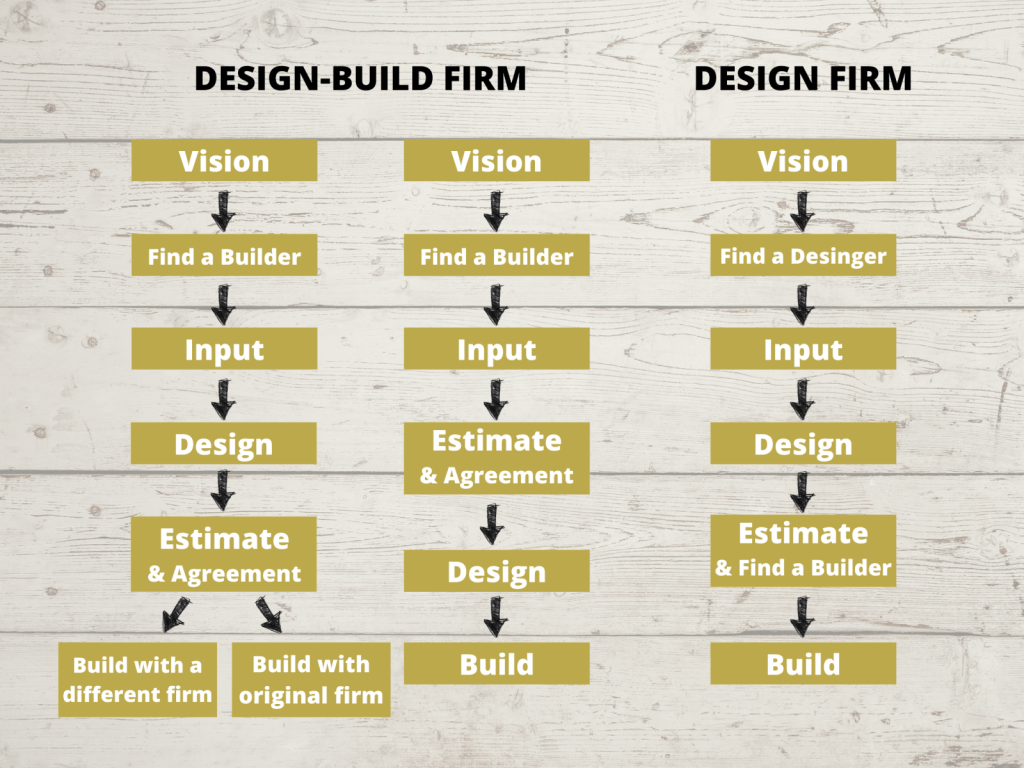
The attached chart illustrates the chain of events using each method:


Comparing the process of hiring an architect versus working with a design-build firm in San Diego, CA

This article was written and edited by Eddie and Mike from Y9 Construction Inc.

If you have any questions or thoughts about which approach is better for you, please feel free to leave a comment below or contact us to set up a free consultation; we’d love to assist you with your next San Diego home improvement project.

How to Choose a Remodeling Company

How can you decide which home remodeling company is the best match for you?

Remodeling your home is one of the biggest decisions you can make, both financially and emotionally. Maybe you’re upgrading your kitchen, adding an ADU, or reimagining your entire space. Whatever the goal, the company you choose will shape how the experience feels, from the first idea to the final walkthrough.

San Diego has no shortage of builders and designers, but finding the one that truly fits your style, budget, and expectations can be tricky. The right partner isn’t just good with tools or design. They listen, communicate, and treat your home with respect. Here’s what to look for when choosing a remodeling company that delivers quality results and a smooth, stress-free process.

Two boxers in a ring symbolizing how looks alone can't determine real skill, similar to choosing a remodeling company.

Would you be able to tell by mere sight which one of these fighters is the best one?

Two chefs preparing food in a kitchen representing how visual results don't always show the full process in remodeling

Similarly, can you undoubtedly tell who is the best chef simply by looking at the food?

Two professionals in business attire symbolizing the importance of choosing a remodeling company with proven reliability and communication

Would you be able to tell which one of these professionals will perform better simply by sight?

1. Look Beyond the Portfolio — Ask About Process

A beautiful gallery tells only part of the story. Ask how the company manages scheduling, communication, and project changes. Today’s top remodeling firms use clear digital tools for progress updates and budget tracking — keeping clients in the loop from demolition to the final coat of paint.

2. Confirm Credentials and Experience

San Diego’s building codes and permit systems have their quirks. Work only with a licensed and insured general contractor who’s experienced with local zoning and inspection processes. Firms with deep San Diego roots, like Y9 Construction, understand neighborhood-specific challenges — from older North Park homes to coastal humidity control.

3. Prioritize Transparency and Communication

Remodeling is a team effort. A company that communicates clearly and consistently will save you stress and money. Look for contractors who explain every step of the process, provide itemized estimates, and are upfront about possible challenges.
You should always know who your main point of contact is and how to reach them. Regular updates and quick responses show that a company values professionalism and accountability. These habits often make the difference between a smooth renovation and a frustrating one.

4. Pay Attention to How They Treat Your Space

A trustworthy remodeling company treats your home with respect. Look for clean job sites, protective coverings, and crews who show up when they say they will. Attention to detail isn’t just about craftsmanship. It also reflects how seriously a company takes your project and your comfort during construction.

5. Ask for References and Actually Call Them

Online reviews are helpful, but direct feedback from past clients is even better. When you contact references, ask how the company handled unexpected changes, if the project stayed on budget, and how communication was throughout the process. Good contractors will gladly share references and be proud of their long-term client relationships. If past customers are still recommending the company years later, that’s a sign you’ve found a team worth trusting.

6. Experience with San Diego Homes Matters

Every city builds differently, and San Diego has its own character. Homes here often have unique layouts, older plumbing or electrical systems, and specific permitting requirements.
A contractor who has remodeled homes across San Diego already knows what to expect — from how coastal weather affects materials to what inspectors usually look for. That kind of real-world experience helps the project move faster and prevents costly surprises. In the end, you want a team that knows the area well enough to make your renovation both solid and smart.

Now you know what to look for when choosing a remodeling company. Time to schedule your FREE consultation!

Y9 Construction is dedicated to producing high-quality results and providing unparalleled customer satisfaction. Our customer service standard appears to be working for those who have hired us for their project. As a result, most of our new leads are referred to us by our long list of satisfied clients. For this reason and much more, let Y9 Construction help you with your project. Now that you know what to look for when choosing a remodeling and construction company in San Diego, feel free to reach out to us and schedule your FREE consultation!

  • 10637 Roselle St. San Diego, CA 92121
  • 1 (800) 801-0290
  • info@Y9construction.com
  • License: 968372

5 Tips for a Successful ADU Project in San Diego

Accessory Dwelling Units (ADUs) are one of the most effective ways to add space, flexibility, and long-term value to a San Diego property. At Y9 Construction, we’ve guided many homeowners through the process, and here are five key insights that make the difference between a smooth project and a stressful one.

1. Understand Local Regulations

Building an ADU in San Diego starts with understanding the local rules. Zoning laws, parking requirements, setback distances, and maximum square footage can vary by neighborhood. Beginning your project with accurate information helps streamline the permitting process and avoids costly redesigns later.

For official guidance, review the City of San Diego Development Services Department and the county’s ADU Resources Page. The city also publishes Information Bulletin 400 on ADUs, which explains current requirements in detail.

Professional insight: Checking the regulations early helps align your design with legal standards from the start, making approvals smoother and keeping your project on track.

2. Plan Your Budget In Detail

An ADU is a major investment. Costs usually include architectural plans, city permits, construction, and utility hookups. Many homeowners forget to budget for landscaping, furniture, or increased utility usage once the unit is occupied.

💡 Value tip: Get a detailed cost breakdown before you start. At Y9 Construction, we help homeowners identify hidden costs so there are no surprises later. Planning early allows you to secure financing or loans with confidence.

outdoor remodeled luxery san diego house
ADU builder San Diego CA

3. Design For Function And Value

An ADU can serve multiple purposes: a rental unit, a guest suite, or a private office. The key is designing a space that feels both functional and comfortable. Good natural light, smart storage solutions, and energy-efficient systems make a huge difference in usability and long-term value.

💡 Value tip: Think ahead about who will use the ADU in 5–10 years. A rental unit may need a full kitchen, while a home office might benefit from soundproofing. The right design now saves costly remodels later.

4. Choose The Right Contractor

Not all contractors have specific ADU experience. These projects involve more than standard residential construction — they require a solid understanding of permitting, utility connections, zoning compliance, and city inspections. Selecting a contractor without this background can result in lengthy delays, non-compliant work, or significant unexpected costs.

Professional insight: When evaluating contractors, go beyond licenses and insurance. Review their portfolio for completed ADUs, verify their knowledge of San Diego’s ADU ordinances, and ask how they typically manage permitting and inspections. Contractors with proven ADU experience tend to anticipate issues before they arise, streamlining the process and reducing risks for the homeowner.

5. Know How Big You Can Build

One of the most common questions we hear is: “What’s the maximum size for an ADU in San Diego County?”

  • Detached ADUs: Up to 1,200 sq ft

  • Attached ADUs: Up to 1,200 sq ft, but limited to 50% of the main residence if smaller

  • ADUs ≤ 800 sq ft: Often exempt from FAR, lot coverage, and open space limits

  • Junior ADUs (JADUs): Up to 500 sq ft, created within the primary dwelling

  • Conversions: Existing garages, attics, or basements may not be bound by the 1,200 sq ft cap

Professional insight: Reviewing your property’s zoning and site conditions early helps identify the best ADU size for your lot, streamlining the approval process and supporting the project’s success.

Ready To Take The First Step Towards Your ADU Project?

Building an ADU is a significant investment, and the right guidance makes all the difference. Our team at Y9 Construction is here to walk you through the process — from design ideas to permits and construction details.

Schedule a complimentary consultation today and let’s explore the best options for your property.

  • 10637 Roselle St. San Diego, CA 92121
  • 1 (800) 801-0290
  • info@y9construction.com
  • License: 968372